Author:

Sarah Lyne
Managing Director and Principal Ecologist
In this guide, we’ll explain when GCN eDNA and population assessments can be carried out and how early planning can help you avoid unnecessary hold-ups in the planning applications process.
Why are great crested newt surveys seasonal?
As with most ecological surveys, great crested newt survey season is tied to the species’ annual lifecycle and their cyclical behaviours. In order to gather reliable results, ecologists must carry out surveys when the species are most active and easiest to detect.
For great crested newts, this is led by these main factors:
- Migration to breeding ponds: As temperatures rise in the spring, great crested newts leave their terrestrial (land) habitats and migrate to ponds to breed.
- Breeding and egg-laying: During the breeding season, adult newts spend more time in ponds, where courtship, mating and egg-laying take place. They’re easier for ecologists to find during this time.
- Movement to terrestrial habitats: Following the breeding season, great crested newts disperse into surrounding habitats such as grassland, woodland and hedgerows. They become more difficult to survey.
- Reduced winter activity: During colder months (October to February), activity levels decrease significantly as newts shelter and hibernate in terrestrial habitats.
Learn more about a year in the life of a great crested newt.
The great crested newt survey season
Great Crested Newt eDNA Surveys
Survey window: 15 April – 30 June
Environmental DNA (eDNA) surveys involve collecting water samples from suitable ponds to test for traces of great crested newt DNA. They are typically used to determine the likely presence or absence of great crested newts and are often the first survey undertaken where suitable breeding habitat is present.
eDNA can only be reliably detected during the breeding season, which is why surveys are limited to the official sampling window.
Great Crested Newt Population Assessments
Survey window: Mid-March – Mid-June
Peak survey period: Mid-April – Mid-May
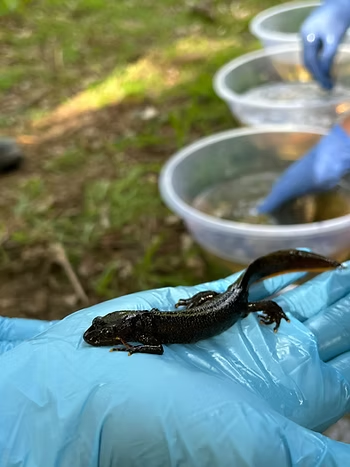
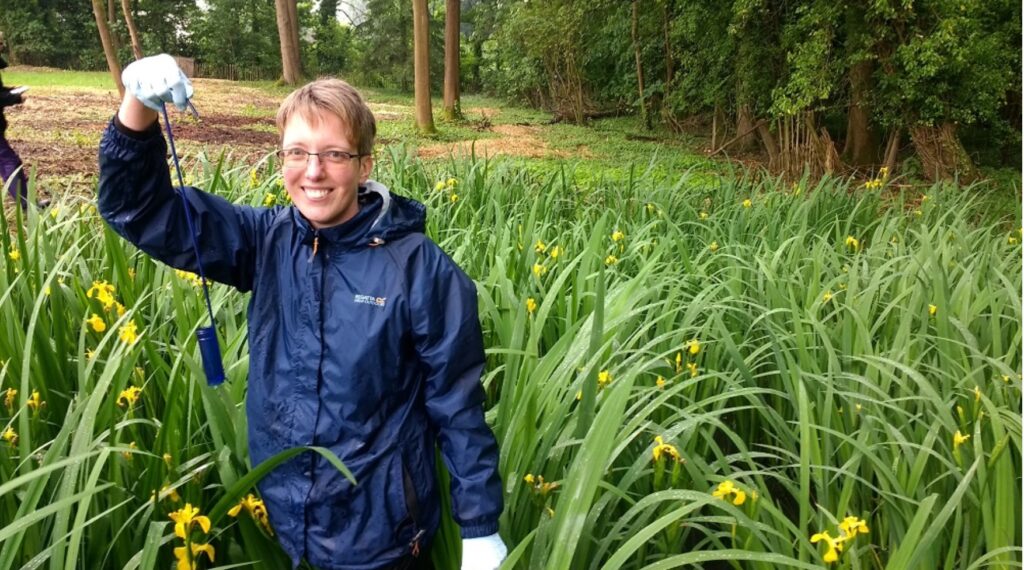
A Great Crested Newt Population assessment helps ecologists to gather more detailed information about a pond habitat, such as confirming great crested newt presence, estimating population size or informing mitigation and licensing.
Population assessments involve multiple survey visits using a variety of methods, including torchlight surveys, bottle trapping, egg searching and netting. These visits are spread across the breeding season to build a clearer picture of how great crested newts are using the site. Because of this, at least three of these surveys need to take place in the peak survey period when newts are most active, from mid-April to mid-May.

Planning your project around great crested newt survey season
As great crested newt surveys are highly seasonal, early planning is essential to keep your project on track should this protected species be likely to be affected.
To help keep your project to timelines, we recommend:
- Commissioning a Preliminary Ecological Appraisal (PEA) early, allowing any potential great crested newt constraints to be identified as soon as possible.
- Allowing time for follow-up surveys, as population assessments require multiple visits over several weeks.
Here for your great crested newt survey needs
Our experienced ecologists can advise on the surveys your site may require and help you plan around seasonal survey constraints, helping to keep your project on track.
From Preliminary Ecological Appraisals and great crested newt eDNA surveys to population surveys and ongoing ecological support, we provide robust survey data and planning-ready reports to meet your requirements. Get in touch with us to find out more.