Author:

Sarah Lyne
Managing Director and Principal Ecologist
In this guide, we explain what BNG means, the legislation behind it and how biodiversity gains are calculated and delivered. With this knowledge, and the support of an experienced team of Biodiversity Net Gain consultants, developers can effectively plan projects that contribute to meaningful improvements for the natural world.
What is Biodiversity Net Gain (BNG)?
Biodiversity Net Gain (BNG) is a planning requirement designed to ensure that development leaves biodiversity in a measurably better state than it was before work began. In simple terms, this means that habitats lost through development must be replaced, enhanced or newly created so that the overall ecological value of the site improves rather than declines.
BNG focuses on habitat quality and long-term outcomes for nature, and to ensure the gains are meaningful, biodiversity compensation should be planned for a sustained net gain over at least the lifetime of the development (often 25-30 years), with the objective of Biodiversity Net Gain management continuing in the future.
BNG is founded on the application of the mitigation hierarchy: avoidance, mitigation, compensation, and enhancement. We’ll cover this in more detail below.

When did Biodiversity Net Gain become a requirement, and what does legislation & policy say?
BNG became mandatory for major developments in England on 12th February 2024, and in April 2024 for minor developments, under Schedule 7A of the Town and Country Planning Act 1990 (as inserted by Schedule 14 of the Environment Act 2021).
Under this legislation, most developments must deliver a minimum 10% measurable improvement in biodiversity in each habitat type that is present in the baseline, including:
- Area habitats (such as grassland, woodland or scrub)
- Hedgerow habitats (for hedgerows and linear habitat features)
- Watercourse habitats (for rivers, streams and drainage channels)
Some local planning authorities require developments to deliver a measurable BNG of greater than 10%.
BNG has four distinct rules under this legislation:
- The Trading Rules is satisfied.
- The minimum of a 10% net gain for each unit type is distinct.
- The Biodiversity Metric Calculation Tool must be used.
- In exceptional ecological circumstances, deviation may be permitted.
There are also ten ‘Principles’ of BNG, which do not have a legal basis; however, there is still a requirement to have regard to the user guide, so the methodology should still be followed.
How Biodiversity Net Gain is calculated (Statutory Biodiversity Metric)
The trading rules mentioned previously set minimum habitat creation and enhancement requirements to compensate for specific habitat losses, up to the point of no net loss. They are based on the habitat type and distinctiveness of the lost habitat.
Habitats proposed must be like-for-like or better, and trading down must be avoided where possible.
Biodiversity Net Gain is measured using the statutory Biodiversity Metric developed by DEFRA. The metric converts habitat information into biodiversity units, which act as a standardised way of measuring ecological value, taking into account factors such as habitat type, size, condition and distinctiveness.

BNG calculations compare two key stages:
- Baseline Habitat Value: The ecological value of habitats present on the site before development.
- Post-Development Habitat Value: The predicted ecological value of habitats that will remain, be enhanced or be newly created after development.
The change in biodiversity units is calculated by subtracting the baseline biodiversity units from the post-development biodiversity units, and there should be a minimum of a 10% increase in biodiversity units.
The metric assessment should be completed by a suitably qualified individual, such as an ecologist, who has the skills and knowledge to conduct and review the calculations within the metric.
Biodiversity Net Gain assessments & planning
Biodiversity Net Gain is closely linked to the planning and design process, requiring developers, project teams and ecologists to consider how ecological impacts will be addressed on-site and how biodiversity improvements will be delivered in practice.
Read on to understand how the biodiversity gain hierarchy guides responsible design decisions.
The Biodiversity Net Gain hierarchy

Best practice for BNG follows the biodiversity gain hierarchy, which prioritises protecting existing habitats and delivering improvements on-site wherever possible.
The hierarchy guides how ecological impacts should be addressed during the design and planning process:
- Avoidance: The first step is to design development proposals in a way that retains important habitats and ecological features wherever possible. Relevant ecological services for this level include species surveys, Preliminary Ecological Appraisals (PEA) and Ecological Impact Assessments (EcIA).
- Mitigation: Where impacts cannot be avoided, steps should be taken to reduce harm to habitats and species through careful design and mitigation measures. Relevant ecological services for this level include mitigation planning and on-site Ecological Clerk of Works (ECoW) supervision.
- Compensation: If habitat loss cannot be avoided or sufficiently mitigated, new habitats may need to be created or restored to compensate for the loss.
- Enhancement: Opportunities should also be taken to improve biodiversity by enhancing existing habitats or creating new ones that support wildlife.
BNG credits & off-site gains
In most cases, delivering biodiversity improvements on-site is the preferred approach. However, if a measurable 10% net gain in biodiversity cannot feasibly be achieved on-site, then there are two options:
- The first option is off-site habitat creation or enhancement. In these cases, new habitats are created, or existing habitats are improved, on land outside of the red line boundary of the development, making up the deficit in biodiversity units on-site. This is the preferred option for local planning authorities. An off-site provider could be a land manager, a landowner or an organisation acting as a habitat bank.
- The second option, and last resort, is purchasing biodiversity credits. Buying statutory credits means that, as well as, or instead of, creating and enhancing biodiversity on or off-site, developers can make a financial contribution which counts towards their mandatory 10% BNG. This contribution will be used to fund biodiversity enhancements across England. More information on purchasing biodiversity credits can be found on the Government website here.
About Rule 4: Exceptional Ecological Circumstances
Most projects should not use Rule 4, which permits deviation in exceptional ecological circumstances. This occurs when:
- The site has optimal conditions (such as soil condition, hydrology or nutrient status) for restoration of a wildlife-rich or historic natural habitat.
- The project team has the expertise and resources to deliver the habitat with negligible risk of failure.
However, it can be used only where there are either:
- Highly complex landscape scale habitat changes, such as the creation of heathland or a heathland grassland mosaic,
- River re-meandering, or
- Large-scale restoration of natural processes.
If you meet the requirements to use Rule 4, the relevant planning authority should be engaged prior to the submission of the biodiversity gain plan. The Local Planning Authority needs to be satisfied that the exceptional ecological circumstances are occurring to allow for the application of Rule 4.

Biodiversity Net Gain examples
Biodiversity Net Gain can be delivered in a variety of ways depending on the site, the habitats present and the scale of development. Some examples include:
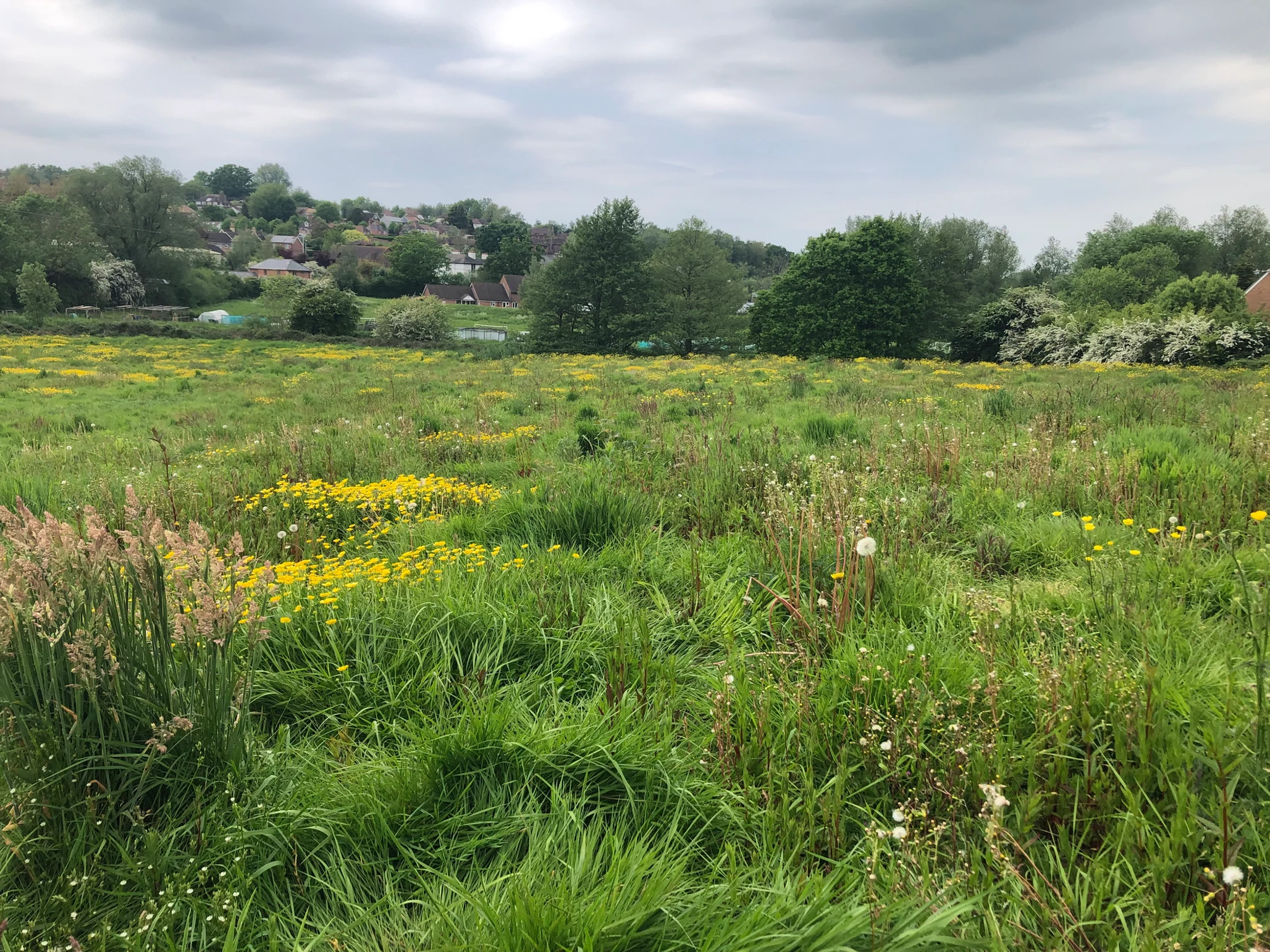
- Housing schemes delivering BNG by creating species-rich grassland in public open spaces, planting native trees, installing ponds or wetlands and improving the management of existing green areas.
- Business parks or industrial sites achieving biodiversity gains by retaining and strengthening hedgerows, planting woodland buffers, installing wildlife corridors and improving landscaping to support pollinators and birds.
- Road or highway projects delivering BNG by restoring hedgerows, creating wildlife corridors alongside transport routes and improving grassland or woodland habitats along the development boundary.
Biodiversity Net Gain exemptions
While Biodiversity Net Gain is now a mandatory requirement for most developments in England, some projects are exempt from the policy. Common exemptions include:
- Householder planning applications, such as small home extensions or sheds.
- Certain small-scale developments that do not impact priority habitats and impact less than 25 square metres (5m by 5m) of on-site habitat or 5 metres of on-site linear habitats, such as hedgerows.
- Planning applications made before mandatory BNG legislation was in place on 12 February 2024.
- Urgent crown developments, where delivering long-term biodiversity improvements would not be feasible.
This list is not exhaustive, and you can learn more about BNG exemptions here.
Practical guidance for developers & BNG steps

Biodiversity Net Gain can seem complicated at first, but most developments can meet requirements successfully when ecological considerations are integrated early in the design and planning process. These are the steps you will take to address BNG requirements in your development:
- Confirm whether BNG applies to your development, or whether it is exempt.
- Engage an ecologist early in the design process to identify important habitats and highlight opportunities.
- Understand the pre-development biodiversity value of the site, usually through a Preliminary Ecological Appraisal (PEA) conducted by an ecologist.
- Complete habitat and condition assessments to establish the baseline ecological value.
- Calculate biodiversity units using the Defra Biodiversity Metric, comparing baseline habitat value with the predicted post-development value.
- Prioritise on-site habitat enhancement and only consider off-site solutions where necessary.
- Prepare a Biodiversity Gain Plan to set out how biodiversity improvements will be delivered, managed and monitored.
- Plan for long-term habitat management to ensure lasting ecological benefits.
Biodiversity Net Gain: the bottom line
Beyond minimising ecological harm, Biodiversity Net Gain policy aims to ensure that new development contributes to measurably positive impacts on biodiversity. Most developments can achieve BNG successfully when ecological considerations are integrated early in the design process.
If you would like advice on Biodiversity Net Gain requirements for your project, our team of experienced ecologists can help you understand what is required and how it can be achieved responsibly. Contact us today, and we’ll be happy to help.
For even more information, head to our FAQs guide.